

How To Draw An Entity Relationship Diagram
Entity Relationship Diagram
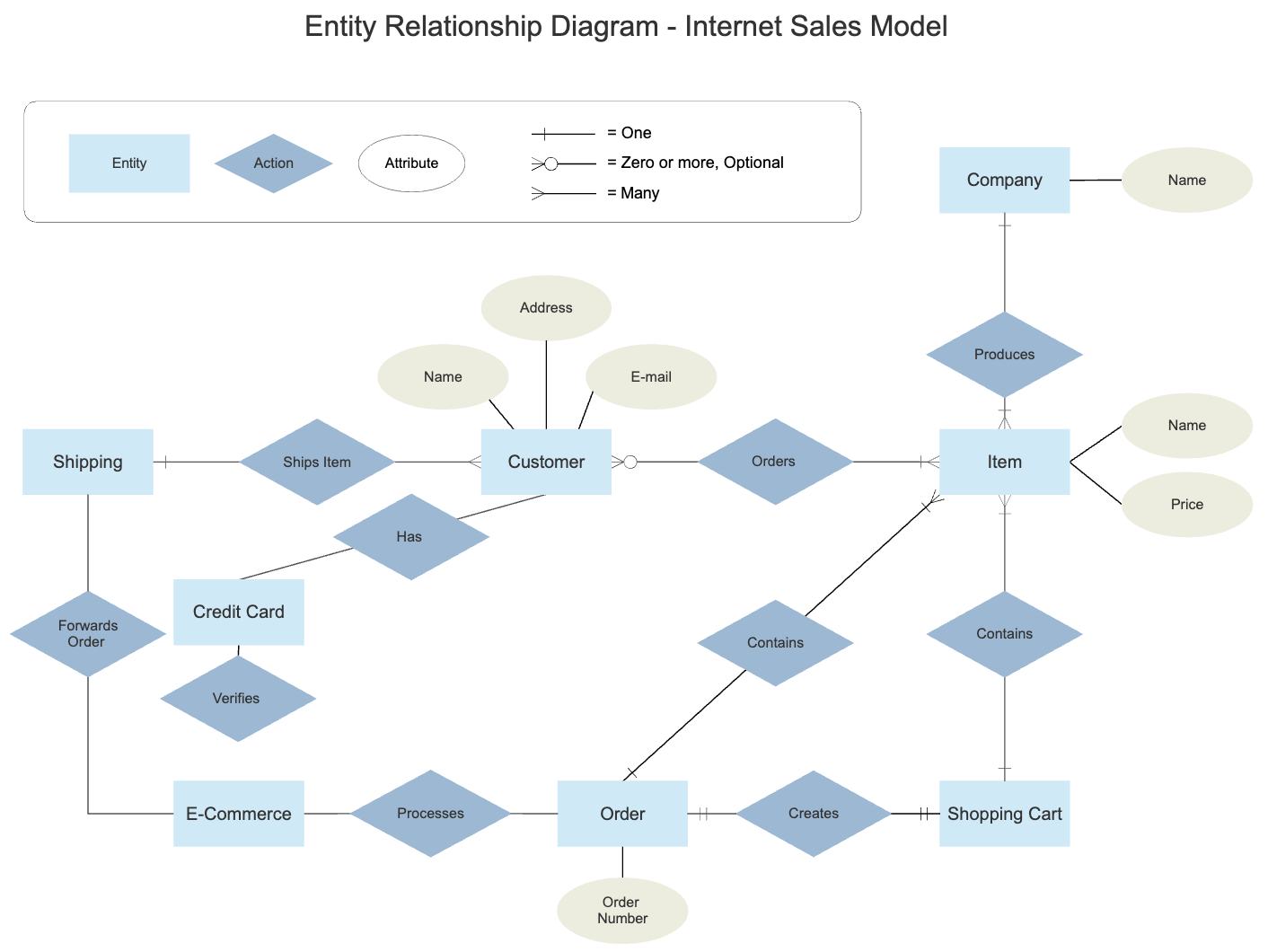
What is an Entity Relationship Diagram (ERD)?
An entity relationship diagram (ERD) shows the relationships of entity sets stored in a database. An entity in this context is an object, a component of data. An entity set is a collection of similar entities. These entities can take attributes that define its backdrop.
Past defining the entities, their attributes, and showing the relationships between them, an ER diagram illustrates the logical structure of databases.
ER diagrams are used to sketch out the design of a database.
Documenting an Existing Database Using Data
At that place are two reasons to create a database diagram. You're either designing a new schema or you need to certificate your existing structure.
If you lot accept an existing database you demand to to document, you create a database diagram using data directly from your database. Yous can export your database structure as a CSV file (there are some scripts on how to this here), then have a program generate the ERD automatically.
This will exist the most accurate potrait of your database and will require no drawing on your part.
Hither'southward an case of a very basic database structure generated from data.
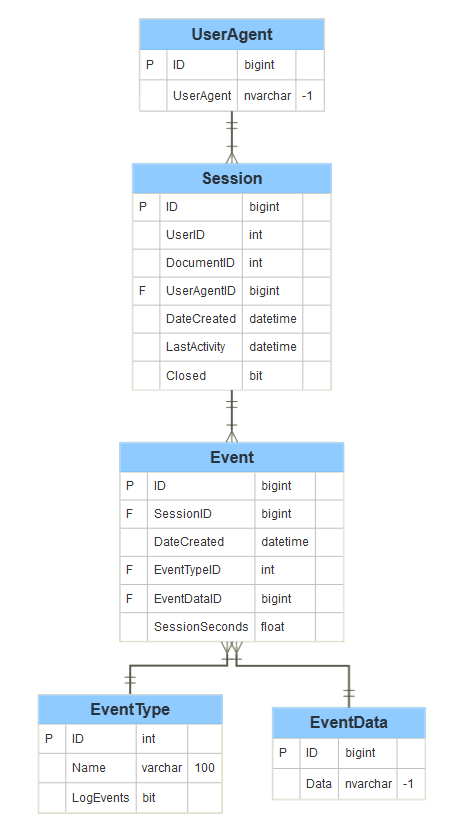
If you want to create a new plan, y'all tin can besides edit the generated diagram and collaborate with your team on what changes to make.
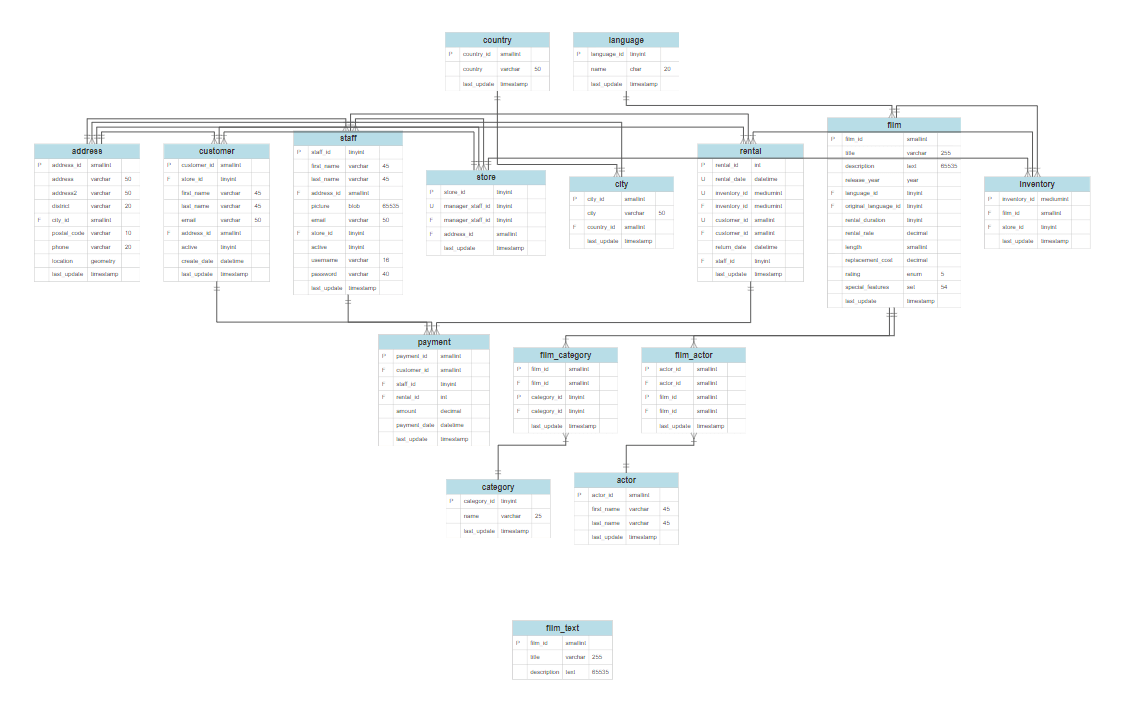
Acquire more than nigh generating ER diagrams from data automatically using SmartDraw's ERD extension.
The History of Entity Relationship Diagrams
Peter Chen developed ERDs in 1976. Since then Charles Bachman and James Martin have added some slight refinements to the basic ERD principles.
Common Entity Relationship Diagram Symbols
An ER diagram is a means of visualizing how the information a arrangement produces is related. There are five main components of an ERD:
- Entities, which are represented by rectangles. An entity is an object or concept about which you want to shop information.
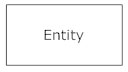 A weak entity is an entity that must defined by a strange key relationship with another entity equally it cannot be uniquely identified past its ain attributes alone.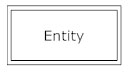
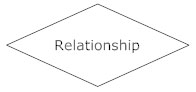
- Deportment, which are represented by diamond shapes, show how two entities share information in the database.
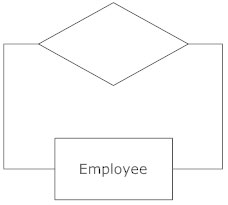
 In some cases, entities can exist cocky-linked. For example, employees can supervise other employees.
- Attributes, which are represented by ovals. A key attribute is the unique, distinguishing characteristic of the entity. For instance, an employee's social security number might exist the employee'south key attribute.
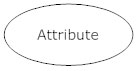 A multivalued attribute can take more than 1 value. For case, an employee entity can have multiple skill values.
 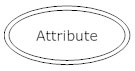 A derived attribute is based on another attribute. For instance, an employee's monthly salary is based on the employee's annual salary.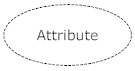
- Connecting lines, solid lines that connect attributes to show the relationships of entities in the diagram.
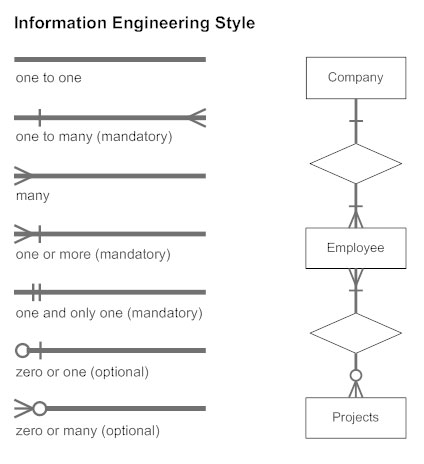
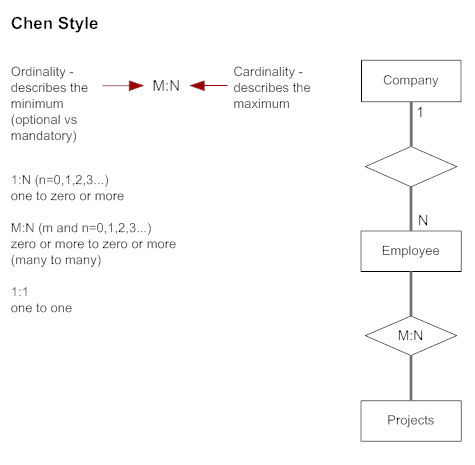
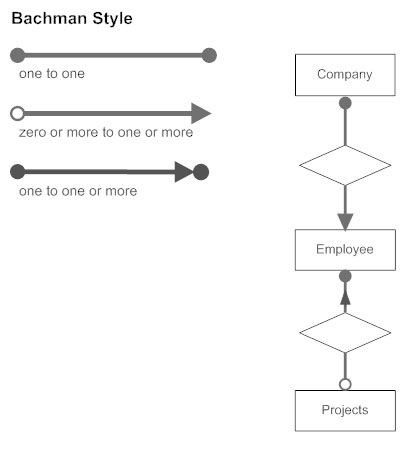
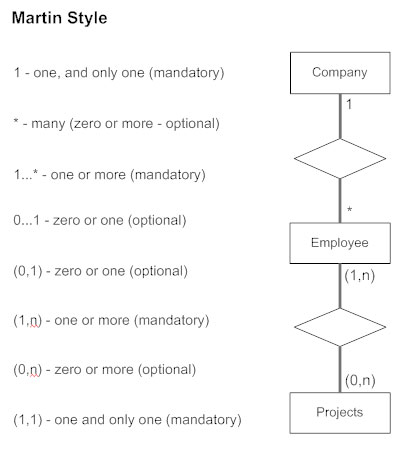
- Cardinality specifies how many instances of an entity relate to 1 instance of another entity. Ordinality is also closely linked to cardinality. While cardinality specifies the occurrences of a relationship, ordinality describes the human relationship equally either mandatory or optional. In other words, cardinality specifies the maximum number of relationships and ordinality specifies the absolute minimum number of relationships.
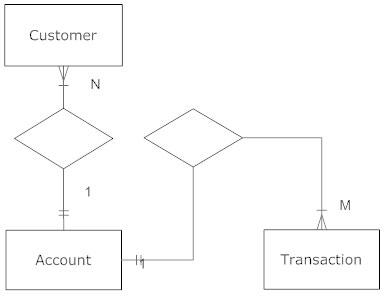 There are many note styles that limited cardinality.
Information Engineering Manner
 Chen Mode
 Bachman Style
 Martin Style
ERD Explained
Sentry this quick video learn more near ERD diagrams and their components.
ER Diagram Uses
When documenting a organisation or process, looking at the organisation in multiple ways increases the understanding of that system. ERD diagrams are usually used in conjunction with a data flow diagram to display the contents of a data store. They help united states to visualize how data is continued in a general way, and are particularly useful for amalgam a relational database.
Entity Relationship Diagram Tutorial
Here are some best practice tips for constructing an ERD:
- Identify the entities. The get-go step in making an ERD is to place all of the entities you lot will use. An entity is nothing more a rectangle with a description of something that your system stores information about. This could be a customer, a manager, an invoice, a schedule, etc. Draw a rectangle for each entity y'all can recall of on your page. Keep them spaced out a bit.
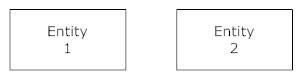
- Identify relationships. Look at ii entities, are they related? If so draw a solid line connecting the two entities.
- Describe the relationship. How are the entities related? Draw an action diamond between the ii entities on the line you simply added. In the diamond write a brief description of how they are related.
- Add attributes. Whatever key attributes of entities should be added using oval-shaped symbols.
- Complete the diagram. Go on to connect the entities with lines, and adding diamonds to describe each relationship until all relationships have been described. Each of your entities may non accept any relationships, some may have multiple relationships. That is okay.
Tips for Effective ER Diagrams
- Make sure that each entity but appears one time per diagram.
- Proper name every entity, relationship, and attribute on your diagram.
- Examine relationships between entities closely. Are they necessary? Are in that location any relationships missing? Eliminate any redundant relationships. Don't connect relationships to each other.
- Use colors to highlight important portions of your diagram.
Entity Relationship Diagram Examples
Browse SmartDraw'due south entire drove of ERD examples and templates

Source: https://www.smartdraw.com/entity-relationship-diagram/
Posted by: mendenhallfleavermak.blogspot.com
0 Response to "How To Draw An Entity Relationship Diagram"
Post a Comment